
Small Is Radically Reasonable Now
OR: Why I'm a Devoted Fan of Tiny Starts

When the future gets foggy, big moves get risky.
Not “bold and visionary” risky.
More like “this is going to bite us in the butt in six months” risky.
Because even the fancy-pants futurists have to admit that their optimized-for-all-futures scenarios are probably missing a few key subplots and surprise villains.
Which is why, lately, I have become even more deeply devoted to small.
Micro-movements.
Hyper-local projects.
Tiny experiments with surprisingly potent returns.
In a world obsessed with scale, going small can sound like quitting. Like we’re trading ambition for knitting circles and nice intentions. But what’s actually happening is something much more tactical.
Small isn’t retreat.
It’s precision.
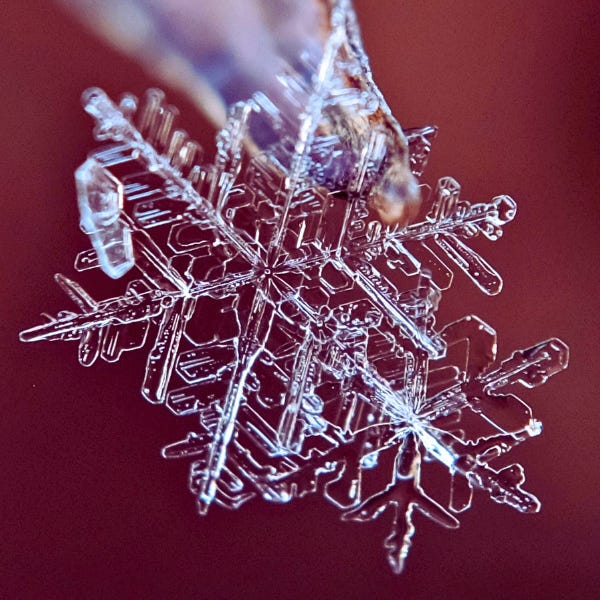
(Despite this icy image, I am sending wishes of warmth and safety to those who have been impacted by the storms in the U.S this last week.)
Small actions shorten feedback loops. They let us learn in human time instead of organizational time. They make it possible to adjust course as soon as a strong whiff of this-is-not-working drifts through the room.
You try something.
You watch what happens.
You tweak it.
Repeat.
Big plans love certainty.
Small actions thrive in uncertainty.
And let’s be honest, uncertainty is where we live now.
Massive rollouts are brittle. One wrong assumption and the whole thing cracks. But intentionally-limited experiments? Those are built to bend.
They start small. If they fail, they fail quietly, but they teach quickly.
Right now, the world does not need more sweeping declarations or save-the-world proclamations.
Let’s skip the empty political promises. What we need are live, living, and lived experiments right where we are.
Small also does something sneaky and wonderful: it restores agency.
When things escalate and the news feels like it’s been written by someone who actively resents your nervous system, “small” becomes a way back into motion.
You don’t have to solve anything.
You just have to do something small.
Something visible.
Something kind.
Something a little weird, maybe.
A sign in a window.
A shared project with neighbors.
A tiny act of beauty in a place that has forgotten it deserves beauty.
These aren’t distractions. They’re signals that say: we’re still here, and we’re still choosing how to live inside this.
Small actions also change our inner weather. They turn a cold front of fear into a warm system filled with possibility. Dreaming up small actions lets imagination shine again. And pairing those ideas with the enthusiasm of other people? That’s a sunny forecast.
Another thing about small actions: they remind the body that it still has hands, and the hands still know how to make things.
But here’s the part that still surprises people:
Momentum does not follow ambition.
Momentum follows engagement.
I see this with every client I work with: big ideas don’t get things rolling.
What starts building momentum is talking to others about your huge but vague idea, getting feedback, sitting with it, and turning a big puffy thought into something you can actually hold.
Pearl-sized.
Small, luminescent, and life-affirming.
We’ve been trained to worship big. But that’s not our natural setting.
We need to start by co-creating little opportunities to feel solidarity. Nervous systems need the salve of completion. We must be able to picture ourselves finishing what we start, not just muse about getting to it someday.
In systems hollowed out by endless growth mandates, small becomes radically reasonable.
It avoids spectacle.
It sidesteps burnout.
It refuses the lie that only massive gestures count.
Small says: what can I do right here, with what I have, with the people I can actually reach?
That question is not naïve.
It’s strategic.
So if you’re feeling that crushing blend of urgency and helplessness that seems to be the flavor of this moment, here’s the reframe I want to offer you:
You don’t need a master plan.
You need a first move.
Fall in love with what you can create now.
Let the next step reveal itself instead of demanding certainty in advance.
Tiny is not timid.
It keeps us strong and flexible while we swim in uncertainty.
The roar of big-systems collapse is loud.
But small actions can turn that thunder into something like an aurora of connection and creativity that lights us up from the inside.
And honestly?
I’ll take a thousand small, clumsy, heartfelt actions over one likely-flawed five-year plan any day.
PROMPT:
What’s one big puffy idea that you can share with your (remember last week’s prompt?) partner in gleeful plotting?
How might you turn it into a gleaming pearl of potential?
PLAY:
This heavy week, I have been especially grateful for plenty of fun updates from our oldest grandchildren (ages 5, 6, and 6), including loose teeth, a sweet show-and-tell video, a fantastic 100-day celebration drawing, and more.
Here’s a sample: Our six-year-old grandson had Letter Day at his school to celebrate with his classmates for learning all of the Dutch letters/sounds.
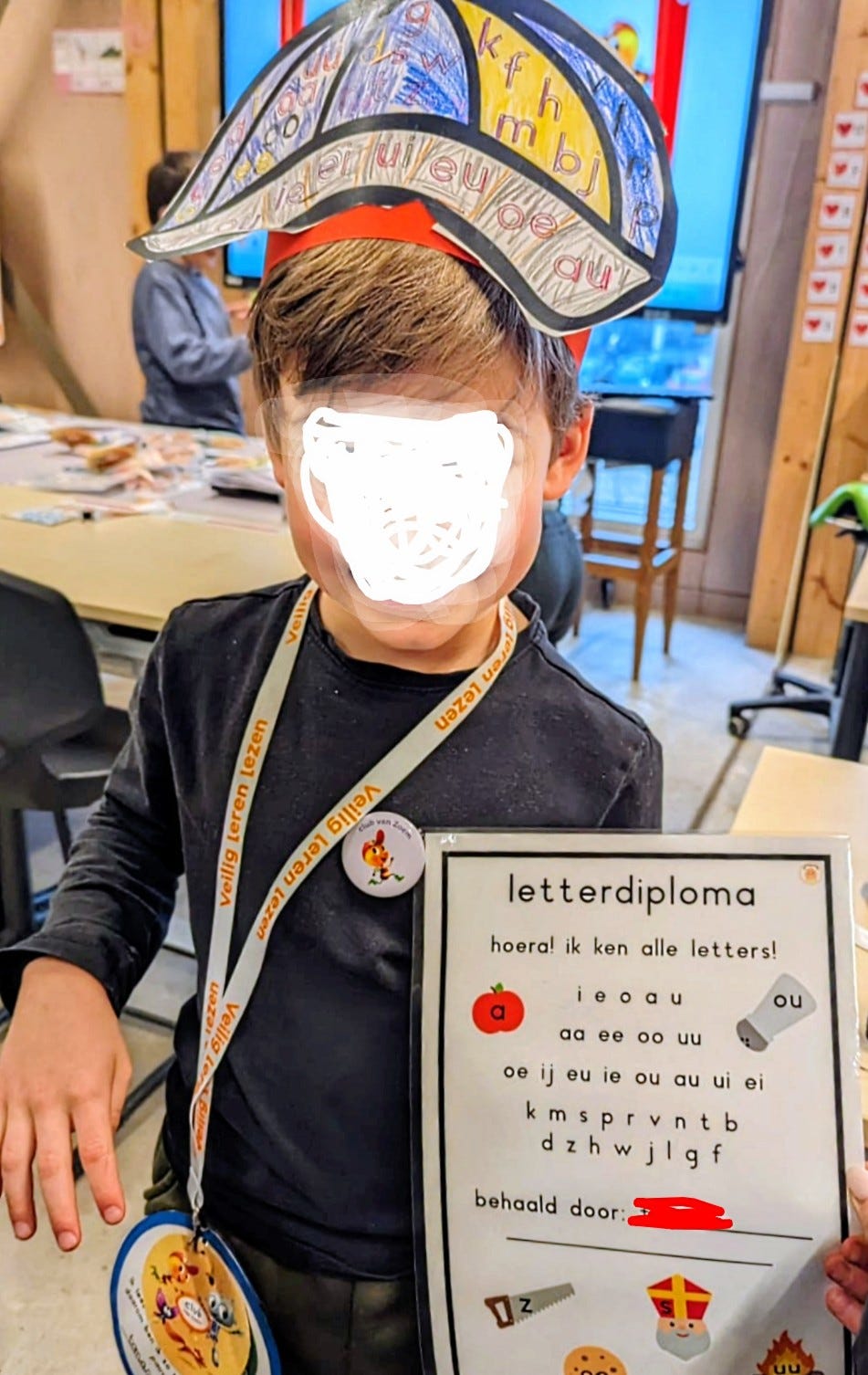
What do you feel proud of yourself for this past week? (Maybe “all” you did was get through it, which is plenty, so recognize that.)
PONDER:
I read a helpful post recently by Paul T. Shattuck about the two general types of responses to stress and danger.
Problem-solving coping: directing energy toward changing things, focused on action, urgency, fixing, and pushing forward.
Emotion-focused coping: regulating responses in order to stay steady in the chaos, focused on holding space, naming emotions, and seeking connection.
Both are understandable ways of responding to change. But there is a tendency to misunderstand and even resent those who approach things differently than we do.
Problem-solving folks may see emotion-focused people as weak or unwilling to act.
Emotion-focused people may see the problem solvers as unfeeling and forging ahead using old approaches to facing problems.
QUESTION: how might we weave together both responses for the common good? How can we learn from each other in ways that help us become more trusting and fully engaged?
Thank you for being here, for reading this, and for being open to seeing the beauty, power, and intelligence of small actions.
Stay safe. See you next week. ❤️

.
Small is beautiful :)
And even big things are done with lots of small parts. So small is not small.